The Agent Harness Hackathon: give AI models a license to act. August 24 to 30, 2026, with an NVIDIA DGX Spark and a Mac Mini among the prizes

The Agent Harness Hackathon

Give AI models a License to act

You get an agent working in an afternoon. Then you point it at something that matters and it can't reach your tools, can't run its own code safely, and can't be stopped before it does damage. Build one that can do all three, on TrueForge, TrueFoundry's open-source agent harness.

Read firstGetting Started Guide For The Agent Harness Hackathon

Mission dossier

File TF-007

When
August 24–30, 2026. Monday 8 AM to Sunday 8 PM, London
Where
Take part ONLINE from anywhere, or join us in SF
Teams
Solo or up to 4 people
Prizes
$10,000 in prizes, including an NVIDIA DGX Spark and a Mac Mini, plus job interviews at TrueFoundry

01 / Prizes

Incredible Prizes

Three judged tracks, two of them from the main sponsors, and two more prizes open to everyone taking part. Nothing to pick when you enter, and the top projects get a job interview at TrueFoundry.

Double-O trackPresented by TrueFoundry
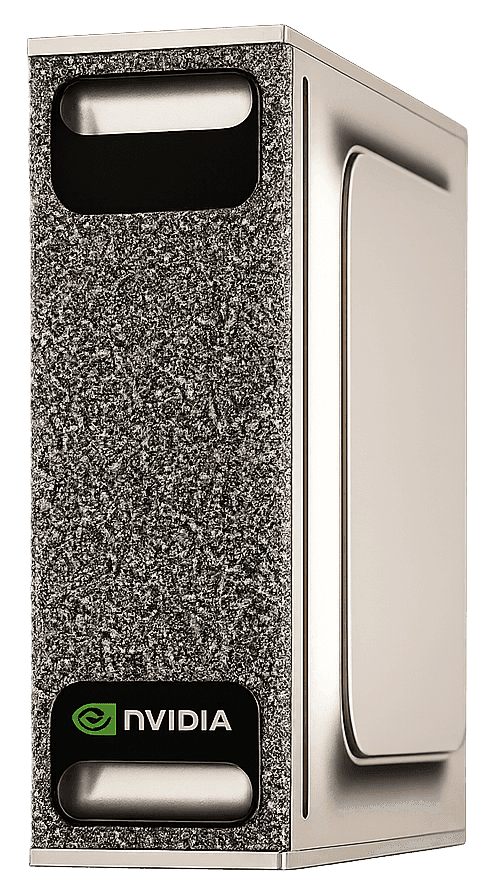
The NVIDIA DGX Spark personal AI supercomputer awarded for the best use of TrueForge

NVIDIA DGX Spark

Personal AI supercomputer

Prize value

$5,000

To the winning team

Best Use of TrueForge

For the agent that gets the most out of the harness: real tools connected through MCP, generated code running in a sandbox, a pause for human approval before anything irreversible, work handed to subagents, a session that holds together across reconnects. Any domain, any use case. What matters is that the harness is doing the work rather than sitting underneath a thin wrapper.


Q Branch trackPresented by Qodo

The Mac Mini awarded for the best code quality

Mac Mini

Apple silicon on your desk

Prize value

$1,000

To the winning team

Best Code Quality

For the team that treats a hackathon repo like real software. Every submission works through pull requests reviewed by Qodo; this track goes to the team that used it best. Set it up on day one, deal with what it finds before you merge, and ship something a stranger could clone, understand, and extend. Judges read the review trail.

Savile Row trackJudged on your submission

The Apple iPad awarded for the best user interface

Apple iPad

To every member of the team

Best UI

For the team whose agent is something a stranger could pick up and drive. An interface that shows what the agent is doing, what it is waiting on, and what it did, and asks before the irreversible step rather than after it. Judged on the demo video and on the running project, not on a screenshot.

Field reportOpen to everyone

The Keychron keyboard awarded for the best blog post

Keychron Keyboard

To one writer

Best blog post

Write up what you built: the job you gave the agent, how you wired it up, what TrueForge handled for you, what broke along the way. Screenshots and a demo clip help. Publish it anywhere and add the link to your submission.

Radio trafficOpen to everyone

The swag awarded for the ten best social posts

Swags

To ten of you

Top 10 social posts

Share what you are building while you build it: a clip of the agent working, a thing that surprised you, a bug that took an hour. Tag WeMakeDevs, TrueFoundry and Qodo so we can find it.

02 / The challenge

A chatbot answers questions. An agent acts on them.

It opens the pull request, queries the database, runs the script. Acting is the hard part, because it takes three things a chat window never needed.

A TrueForge session

Illustration

Investigate the payment-failures alert. Roll back if a deploy caused it.

grafana · error rate by service (MCP)

sandbox · bisect the last four deploys

cause found · deploy 4c21 doubled checkout timeouts

Rollback is irreversible. Holding for your approval.Licence required

Approved by you · 4c21 rolled back

error rate recovering · session logged

The loop, the tool calls, the sandbox, and the pause are all the harness. You wrote one line of it.

  • A way to reach your systems

    Your GitHub, your database, your internal tools, your calendar. Connected, not mocked.

  • A safe place to run what it writes

    Generated code has to execute somewhere that cannot damage anything if it is wrong.

  • A way to stay in control

    It should stop and ask a person before doing anything you cannot undo.

The layer that sits between the model and everything it touches, and handles all three, is called an agent harness. TrueForge is an open-source one, so you spend the week on the actual problem instead of building the machinery around it. The domain is yours: pick a job worth handing to an agent, in any field you like, and build the agent that does it.

Code review

Every pull request goes through Qodo

Code review is part of the build. Every submission, solo or team, runs its substantive changes through a GitHub pull request reviewed by Qodo before merge. Direct pushes to main do not count as reviewed work.

  1. Set it up once per team

    One team member with admin access to the repository signs in to Qodo, opens Integrations > SaaS > GitHub > Add installation, and authorises Qodo for the hackathon repo. Open a pull request and Qodo starts on its own; if it does not, comment this on the PR. One installation covers the whole team, teammates do not need accounts, and the 14-day trial takes no card, so setting it up at kickoff covers the week.

    /agentic_review

    Sign in to Qodo

  2. Run every substantive merge through it

    Branch, pull request, Qodo review, your decision, follow-up review, then a human merges. Fix every valid High-severity finding. If a High finding is wrong, deferred, or intentional, dismiss it in the Qodo thread and record the reason. Medium and Low are your engineering call. Push, then run the review again so the PR records what was resolved or dismissed. Qodo supports the review; your team still owns the merge.

    How a review is triggered

  3. Put the proof in your README

    Add this section to your public README: a link to at least one representative merged PR containing meaningful hackathon code, one or two sentences on what Qodo surfaced and what you changed or intentionally dismissed, and a PR history showing the completed review, your decisions, and a follow-up review against the final code.

    ## Qodo Code Review Evidence

    What a Qodo finding looks like

The public pull request link is the required evidence. Screenshots may add context, but they cannot replace it. Judges may inspect other substantive merges to confirm that Qodo review was part of the build rather than a one-time submission step.

03 / Tools

The harness, the reviewer, and the credits

TrueFoundry builds the harness every submission runs on. Qodo reviews the code you write around it. OpenAI covers the experiments in the room.

TrueFoundry

Main sponsor · Agent harness

TrueFoundry builds the infrastructure companies use to run AI in production, across any model and any cloud, in their own environment. TrueForge is its open-source agent harness: the runtime layer around a model that turns it into a working agent, and the thing every submission this week runs on.

Drive it three ways: a chat UI, an HTTP API, or a TypeScript library. Open source, no account required.

What the harness handles for you8 things
  • Connects to your tools

    Any MCP server, including ones behind OAuth, plus 40+ built-in tools and web search.

  • Runs code safely

    Agent-written code executes in an isolated sandbox.

  • Waits for a human

    Pauses before sensitive actions until a person approves.

  • Delegates

    Subagents take on parts of a job.

  • Survives reconnects

    Sessions keep running through a refresh, a reconnect, or a server restart.

  • Runs on any model

    OpenAI, Anthropic, Gemini, DeepSeek, or any OpenAI-compatible endpoint, switchable from the UI.

  • Loads Skills

    Reusable instruction packs the agent picks up when a task calls for them.

  • Scales when you do

    A single process on SQLite on your machine; multiple replicas on Postgres and Redis.

Once an agent is running for real users, TrueFoundry's AI Gateway and MCP Gateway answer what it costs, what it did, and what it is allowed to touch. Neither is needed for this hackathon.

Qodo

Main sponsor · Code review

Qodo is an AI code review platform, used by engineering teams at NVIDIA, Intel, Walmart, and Intuit. Instead of reading only the lines you changed, its review agents build an understanding of your whole repository, its structure, its dependencies, and its history, and use that to judge whether a change is actually safe.

It works in VS Code and JetBrains, on your pull requests through GitHub, and from the command line, and supports all major languages. It is free for open-source projects.

What it does on a pull request4 things
  • Reviews every change with full context

    It sees how a change fits the rest of the codebase, so it catches breaking changes and dependency conflicts a diff-only review would miss.

  • Finds real problems

    Bugs, logic gaps, and requirement gaps, ranked so you deal with the important ones first rather than wading through noise.

  • Suggests the fix

    Findings come with concrete code suggestions you can apply.

  • Learns your standards

    It picks up conventions from your codebase and past pull requests and holds new code to them.

It does not take long to accumulate the kind of mess that makes a repo unreadable, and an open-source project only gets picked up if it is worth picking up. That is what the Best Code Quality track rewards.

OpenAI

Model partner

OpenAI is providing $50 in credits to everyone who joins in person in San Francisco on August 29, so you can experiment on the day without paying for it.

Taking part online? Bring your own key. TrueForge runs on any provider, so you are free to use OpenAI, another provider, or a local model.

04 / Getting started

One command, and the harness is running

No account, nothing to clone, and no agent experience needed. Here is the whole of day one.

Start the harness

Standalone

npx @truefoundry/trueforge

One command, nothing to clone. This is the one to run tonight.

Production ready

git clone git@github.com:truefoundry/trueforge.git
cd trueforge && docker compose up

The whole stack under Compose, for when the agent is doing real work.

Two things turn a running harness into an agent: a model for it to think with, and the tools it is allowed to reach.

Your first hour

  1. Register

    Free, one form, a minute. It is how the stream link and the submission form reach you.

    Register now

  2. Start the harness

    One command, nothing to clone, no account. Both ways in are in the panel above.

  3. Give it a model and tools

    A model for it to think with, and the MCP servers it is allowed to reach. Without the second one it can talk but not act.

    Connect a model and MCP servers

  4. Set up Qodo

    Required of every submission, not only the code quality track. One teammate with admin on the repo signs in, connects GitHub, and opens a pull request. From then on every substantive change goes through a reviewed pull request, and the README links to one.

    Sign in to Qodo

Stuck? Every video, doc, and example we have is on one page.

05 / Project ideas

Six agents worth building, and what makes one finished

The theme is open-ended: build in any domain you like, as long as TrueForge is running the agent. Every card names what it has to reach.

  1. Approval-gated assistant

    Drafts the email, files the ticket, or books the trip, and does nothing irreversible until you approve it.

    Easiest startReaches: Gmail or Slack

  2. Analytics agent

    Answers a question in plain English by writing the SQL itself, running it, and explaining the result.

    Reaches: Your database

  3. Code review agent

    Reads a pull request, runs the test suite in a sandbox, and comments on what it found.

    Reaches: GitHub

  4. Research desk

    Sends subagents across the web on one question and merges what they bring back, with sources.

    Reaches: Web search

  5. Incident responder

    Investigates an alert with read-only queries, then asks a person before restarting or rolling anything back.

    Hero projectReaches: Your cloud

  6. Untrusted code runner

    Runs code somebody else submitted inside an isolated sandbox and returns the result safely.

    Reaches: The sandbox

What every submission needs

  • An agent running on TrueForge, with the harness visibly doing the work: a real tool reached, code run in the sandbox, a pause before anything irreversible.

  • Qodo set up at the start, pull requests it has reviewed, and a Qodo Code Review Evidence section in the README linking to at least one of them.

  • Only tools, data, and accounts that are yours to connect, with keys and personal data kept out of the repo and the video.

  • A public repo with a README a stranger can follow.

  • A demo of about three minutes showing the agent working.

06 / Best practices

How to spend the week well

Five rules to check yourself against before you start. The first one decides whether a project qualifies at all.

  1. The harness has to be doing real work

    This is the one that decides whether a project qualifies. A judge has to see TrueForge reaching a tool, running code in the sandbox, and stopping for a person. If it would work just as well as a chat box, change the project.

  2. Pick one job an agent can finish

    A week is short and the demo is three minutes. One narrow job done end to end scores better than a platform with three half-finished features.

  3. Open pull requests from the first commit

    Set up Qodo on day one and let it review each one. Every submission needs that trail and a README that links to it, and it is what the Best Code Quality track is judged on.

  4. Put the approval gate in the demo

    Control and safety is a judging criterion of its own, and it is the one nobody films. Show where the agent's code ran, and show the moment it stops and asks.

  5. Ship a repo a judge can run

    A public repo with a README that works on someone else's machine. Connect only what is yours to connect, and keep keys and personal data out of it and out of the video.

07 / Judging

What the judges are looking for

Six criteria, weighted equally. The demo is scored as hard as the code.

  1. Potential impact

    Does the agent do a clear, useful job someone would actually hand over?

  2. Creativity and originality

    Is this an inventive job to give an agent, or an inventive way of doing it?

  3. Technical excellence

    Is the implementation complete, reliable, and well structured?

  4. Use of sponsor tools

    Is TrueForge central to the project rather than a thin wrapper around a model, and did Qodo review the pull requests on the way there?

  5. Control and safety

    Does the agent run its code somewhere safe and stop for a human before anything irreversible?

  6. Presentation

    Does the demo clearly explain the problem, the agent working, and where the harness fits?

08 / FAQ

Got questions?

Is it free?

Yes. Taking part costs nothing, online or in person.

Can I build with a team?

Solo or up to four. You can find teammates in the WeMakeDevs Discord. Join the WeMakeDevs Discord.

How do I submit?

Through this site by August 30 at 8:00 PM London time: a public repo, a demo video of about three minutes, and a short write-up of what your agent does and how it uses TrueForge. The schedule page shows that deadline in your own timezone.

What does "must run on TrueForge" mean?

Your agent runs through the TrueForge harness and a judge can see it doing real work. Beyond that, build anything.

Does my submission have to be open source?

Yes. Submit a public repo that judges can read and run.

Can I use code I already have?

Not as the project itself: the build has to happen during the week. Libraries, frameworks, public APIs, and AI coding tools are all fine.

Do I need my own model API key?

Yes, unless you join in San Francisco, where OpenAI is providing $50 in credits. TrueForge works with any provider.

Do I have to use Qodo?

Yes. Every submission runs its substantive changes through pull requests reviewed by Qodo before merging, and the README links to at least one of them. One installation per team is enough; teammates do not need accounts of their own.

Qodo is not responding on my pull request. What now?

Check that the GitHub app can reach the repository and that the repository is active in the Qodo portal, then comment /agentic_review on the PR. If you cannot install it yourself, the repository owner or an organisation admin has to do the one-time setup.

Can one team win more than one track?

No. Every submission is considered for all three, but a team can only take one.

Do I need experience with agents?

No. TrueForge handles the runtime, so you can have something working quickly.

What should I bring on the 29th?

A laptop, a charger, and ID for venue entry. Food and Wi-Fi provided.

Where do I get help?

The WeMakeDevs Discord during the event, or GitHub issues on the repo. Open the TrueForge repo.

Also on · San Francisco

The week runs online from anywhere, and on August 29 it also runs in a room. Spend the day building alongside the TrueFoundry team in San Francisco, with $50 of OpenAI credits for everyone who turns up. Space is limited and the day takes a registration of its own.

Join us on Luma

Seven days · Submissions close August 30, 8:00 PM London time

Build the agent you would trust with root.

Registration is open now. The week runs online from Monday August 24, and the room in San Francisco is there on Saturday the 29th if you want it.

End of briefing

The Agent Harness Hackathon is an independent developer hackathon organised by WeMakeDevs in collaboration with TrueFoundry. It is not affiliated with, endorsed by, or associated with the James Bond films or novels, Eon Productions, Danjaq, Metro-Goldwyn-Mayer, or any of their rights holders. The theme is used purely for creative purposes.